Your Gut Is Stuck in a Rut: How Playing It Safe with Produce Is Quietly Wrecking Your Microbiome
You Think You're Eating Healthy. Your Gut Disagrees.
Let's be honest: most of us have a grocery routine. You know what you like, you know what's easy to cook, and you've got your go-to produce locked in. Bananas on Monday. Spinach in every salad. Blueberries in every smoothie. It feels responsible — even virtuous. But here's the uncomfortable truth that gut researchers have been shouting from the rooftops: eating the same healthy foods on repeat can be just as limiting for your microbiome as eating poorly.
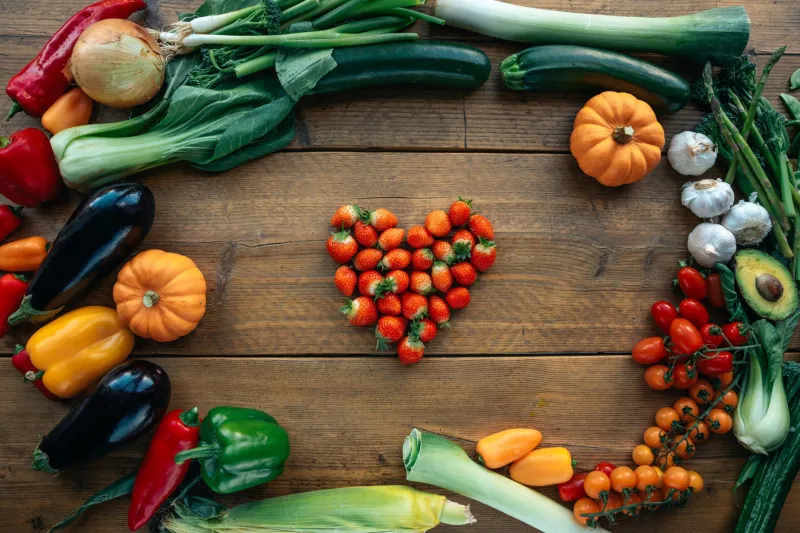
The trillions of bacteria living in your digestive tract aren't a monolith. They're a wildly complex ecosystem — more like a rainforest than a monoculture farm. And just like a rainforest collapses when you remove biodiversity, your gut suffers when it stops receiving a wide variety of inputs. Specifically, it needs variety in plant fibers, polyphenols, and phytonutrients — the very compounds that give fruits and vegetables their distinctive colors.
So if your rainbow is really just three or four shades on repeat, it's time for a serious rotation.
What the Research Actually Says About Variety
The landmark American Gut Project, one of the largest citizen science microbiome studies ever conducted, found something striking: people who ate 30 or more different plant foods per week had significantly more diverse gut microbiomes than those eating 10 or fewer. And that diversity isn't just a nice-to-have — it's linked to stronger immune function, better mood regulation, reduced inflammation, and more resilient digestion overall.
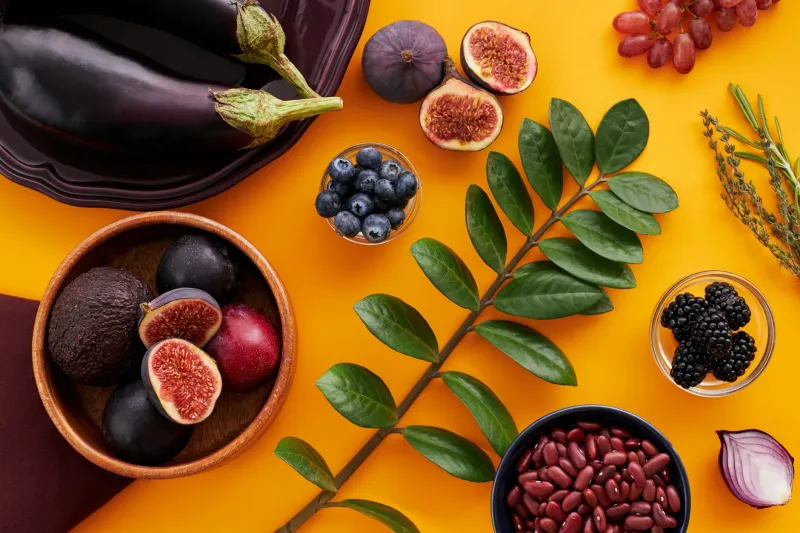
Here's where color comes in. Each color family in the produce world represents a distinct class of phytonutrients. Purple and blue foods — think eggplant, concord grapes, and purple cabbage — are loaded with anthocyanins. Orange and yellow produce brings beta-carotene and flavonoids. Reds deliver lycopene and ellagic acid. Greens supply chlorophyll, lutein, and glucosinolates. Whites and browns — often overlooked — contribute allicin, quercetin, and prebiotic inulin.
Each of these compounds feeds different bacterial strains. Anthocyanins preferentially fuel Bifidobacterium. Inulin from leeks and garlic feeds Lactobacillus populations. The glucosinolates in cruciferous vegetables support bacteria that help process estrogen and reduce inflammation. When you eat only a narrow color band, you're essentially starving entire neighborhoods of your gut community — and those populations shrink or disappear.
The Rut Is Real — and It's Getting Worse
The average American eats fewer than 15 different plant foods per week, according to dietary surveys. And when researchers dig deeper, they find that much of that "variety" is actually just corn, potatoes, and iceberg lettuce showing up in different forms. That's not diversity — that's the same handful of inputs wearing different outfits.
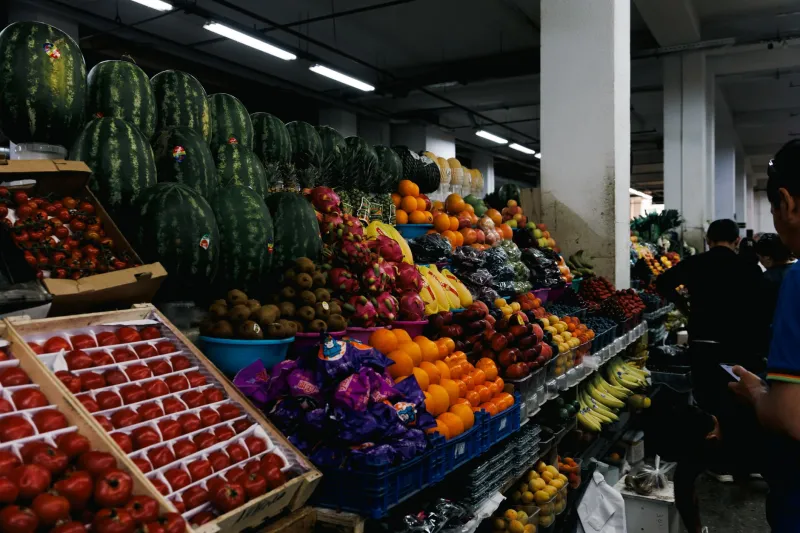
Part of the problem is that the US food system nudges us toward sameness. Supermarkets stock what sells, and what sells is what's familiar. You'll find Fuji apples 52 weeks a year, but good luck finding pawpaws or Concord grapes outside of a narrow fall window. The seasonality and regional specificity that once forced humans to eat diversely has been largely engineered out of the American grocery experience.
The result? Guts that look less like rainforests and more like parking lots.
Color Combinations That Work Together
Rotating colors isn't just about adding random new items to your cart — there's genuine synergy in how certain color combinations interact in your digestive system.
Purple + Green: Anthocyanins from purple foods and the sulforaphane in green cruciferous vegetables (broccoli, Brussels sprouts, arugula) appear to work together to reduce gut inflammation and support the intestinal lining. Try adding purple cabbage to your next broccoli stir-fry.
Orange + Red: Beta-carotene from carrots and sweet potatoes becomes more bioavailable when paired with lycopene-rich tomatoes and red peppers. Together, they support the mucus layer of your gut — essentially the protective coating that keeps your intestinal walls healthy. A roasted red-and-orange sheet pan situation is doing more work than you realize.
White + Yellow: The quercetin in onions and the pectin in yellow apples are a prebiotic power couple, feeding bacteria that produce short-chain fatty acids — the compounds that literally fuel your colon cells. A simple apple and onion chutney isn't just delicious; it's gut architecture.
Blue + Green: Blueberries combined with leafy greens like kale or Swiss chard create a polyphenol-fiber matrix that slows fermentation in the gut, reducing bloating while maximizing the time bacteria have to extract nutrients. This is the smoothie combination your gut has been waiting for.
How to Actually Rotate: A Practical Framework
Knowing you should diversify and knowing how to do it without losing your mind at the grocery store are two different things. Here's a low-friction approach that works with real American schedules.
The One New Color Rule: Each week, commit to buying one produce item you've never cooked before — or haven't bought in over a month. Not a whole new meal plan, just one item. Watermelon radishes in January. Chayote squash in spring. Persimmons in fall. Dragon fruit when you're feeling adventurous on a Tuesday.
Use the Seasons as Your Rotation Guide: The US has remarkable regional produce diversity if you look for it. Spring brings ramps, fiddlehead ferns, and rhubarb. Summer explodes with heirloom tomatoes, tomatillos, and stone fruit varieties you won't find in winter. Fall is peak time for purple sweet potatoes, quince, and wild mushrooms. Winter is when citrus and root vegetables earn their moment. Let the calendar tell you when to rotate.
The Farmers Market Commitment: Even once a month, a trip to your local farmers market exposes you to varieties that never make it to chain grocery stores. Those ugly heirloom tomatoes in six different colors? Each one carries a slightly different phytonutrient profile. The vendor with eight types of hot peppers? Each shade represents a different capsaicin compound with distinct effects on gut motility.
Track Your Plant Points: Borrow the concept from the American Gut Project researchers — try to hit 30 different plants per week. Herbs and spices count (turmeric, ginger, and cinnamon are all plants). So do legumes, nuts, seeds, and grains. Keep a loose mental tally, and you'll be surprised how quickly you start strategizing your plate differently.
The Gut Isn't Forgiving of Monotony
Here's the thing about microbial populations: when you stop feeding certain bacterial strains, they don't just go dormant. They decline. And once certain species drop below a threshold, they can be genuinely difficult to restore — even if you suddenly start eating all the right things. This is why the rotation habit matters more than any single superfood.
Think of your gut like a garden you tend weekly. A garden that only ever gets watered in one corner eventually loses the plants in the other three. Colorful, rotating, season-aware eating is the equivalent of tending the whole thing — giving every corner of your internal ecosystem what it needs to stay alive and thriving.
Your blueberries and spinach aren't the enemy. They're great. But they shouldn't be the whole story. Branch out into the colors you've been skipping, rotate through what's seasonal, and give those underserved bacterial neighborhoods something to work with.
Your gut — and honestly, your whole body — will feel the difference.